Key Points
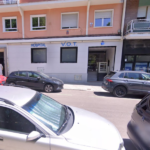
- A 52-year-old woman sustained five critical stab wounds on Tuesday, October 20, 2026, shortly before 3:00 p.m. at the entrance of a residential urbanisation on Ontanilla Street in Carabanchel, Madrid.
- Paramedics from Samur-Protección Civil and Summa 112 successfully reversed cardiorespiratory arrest at the scene before transferring the victim in critical condition to Hospital 12 de Octubre, where she subsequently died.
- Spain’s National Police—specifically Homicide Group V and the Violent Crimes Group of the Scientific Police—are leading the investigation into the fatal assault.
- Authorities are formally evaluating the killing as a possible case of gender-based violence, though all investigative hypotheses remain open.
- At the time of reporting, forensic investigators have not located the murder weapon, nor have officials confirmed any prior complaints of domestic abuse involving the victim.
Madrid Journals (MJ) October 21, 2026 – A 52-year-old woman has died at the Hospital 12 de Octubre in Madrid after sustaining multiple critical stab wounds outside her residential complex in the southern district of Carabanchel, prompting Spanish law enforcement to launch a homicide inquiry with a primary focus on potential gender-based violence. Law enforcement officers and emergency medical teams responded to reports of an assault on Ontanilla Street shortly before 3:00 p.m. on Tuesday, October 20, where the victim was found in severe cardiorespiratory arrest. Although specialized medical personnel managed to re-establish a pulse at the scene, the woman succumbed to her injuries shortly after arrival at the trauma centre.
- Key Points
- How Did the Ontanilla Street Stabbing Unfold in Carabanchel?
- What Forensic and Investigative Steps Are the National Police Taking?
- Is the Carabanchel Murder Formally Classified as Gender-Based Violence?
- Background of the Particular Development
- Prediction: How This Development Can Affect Residents and Policy Stakeholders
How Did the Ontanilla Street Stabbing Unfold in Carabanchel?
As reported by Spanish news agency EFE, emergency services received an urgent alert shortly before 3:00 p.m. on Tuesday, October 20, 2026, regarding an injured woman lying in the entrance portal of a residential development on Ontanilla Street, located in Madrid’s Carabanchel district.
According to medical dispatches published by El País, responders from Samur-Protección Civil and Summa 112 arrived at the scene to find the 52-year-old victim suffering from five distinct stab wounds across her torso. The severe hemorrhage caused the victim to collapse into cardiorespiratory arrest while on the public thoroughfare.
Emergency medical responders performed advanced CPR and managed to stabilize the patient sufficiently to allow for emergency transport. The victim was transferred under police escort to the intensive care unit at the nearby Hospital 12 de Octubre, where medical staff pronounced her dead later that afternoon despite life-saving interventions.
What Forensic and Investigative Steps Are the National Police Taking?
As reported by El Debate, specialized units from the Spanish National Police—including Homicide Group V and the Violent Crimes Group of the Scientific Police—were immediately deployed to secure the residential building and collect forensic evidence. Municipal Police officers also assisted in establishing a perimeter around the entrance portal on Ontanilla Street.
According to official police statements cited by El Español, forensic teams conducted an extensive search of the immediate surroundings, including public rubbish receptacles, drainage systems, and adjoining gardens, but have not yet recovered the edged weapon used in the attack.
Investigators are currently gathering closed-circuit television (CCTV) footage from surrounding commercial establishments and private residential complexes, as well as interviewing neighbors and potential eyewitnesses who were present on Ontanilla Street around 3:00 p.m.
Is the Carabanchel Murder Formally Classified as Gender-Based Violence?
As detailed by journalists covering urban security for Onda Cero, law enforcement officials have activated protocols for gender-based violence (femicide) as a primary line of inquiry, though they maintain that all potential hypotheses regarding the motive remain active.
According to legal reporting in El Constitucional, authorities have not yet confirmed whether the victim had previously filed formal complaints (denuncias) or obtained protective orders through the VioGén system—Spain’s central registry for tracking gender violence cases.
Spokespersons for the National Police emphasized that until forensic analysis, witness testimony, and suspect identification reach a definitive threshold, the murder cannot be formally attributed to a specific individual or definitively logged in official state statistics as a confirmed femicide.
Background of the Particular Development
The investigation in Carabanchel occurs against the backdrop of stringent judicial frameworks governing gender violence in Spain, established principally under Ley Orgánica 1/2004 de Medidas de Protección Integral contra la Violencia de Género (Organic Law 1/2004 on Integrated Protection Measures Against Gender Violence).
Under Spanish law, a distinction is drawn between active police investigations into suspected femicides and cases that are officially verified by the State Secretariat for Security and the Government Delegation against Gender Violence (Delegación del Gobierno contra la Violencia de Género). Official statistical inclusion requires verified evidence of a intimate-partner or former-partner relationship between the perpetrator and victim.
The district of Carabanchel, one of Madrid’s most populous southern urban sectors, has seen increased local policing initiatives in recent years aimed at urban safety and domestic welfare monitoring. High-profile incidents in residential portals draw immediate inter-agency coordination between local municipal officers, national homicide divisions, and specialized judicial tribunals dedicated exclusively to crimes against women.
Prediction: How This Development Can Affect Residents and Policy Stakeholders
This tragic incident in Carabanchel is expected to trigger multi-faceted social, administrative, and legal reactions across Madrid and broader Spanish society:
- For Local Residents of Carabanchel: The public nature of the attack within a private residential portal will likely lead to intensified local demands for increased police visibility and security patrols along Ontanilla Street and surrounding residential corridors. Neighborhood associations may press district authorities for upgraded street lighting and public surveillance infrastructure.
- For Institutional and Policy Stakeholders: Should the National Police confirm this case as a gender-based killing, it will further intensify political debate surrounding the efficacy and response speed of protective frameworks under the VioGén system. State and regional authorities in the Community of Madrid may face increased pressure to evaluate early-warning protocols and expand emergency resource allocation for community-level intervention.
- For Judicial and Law Enforcement Protocols: The case highlights the operational necessity for rapid forensic recovery in urban residential crime scenes. A successful breakthrough by Homicide Group V in locating the missing weapon and establishing the suspect’s identity will set a crucial precedent for how similar public-portal violent crimes are managed and communicated to the public before formal classification.