Key Points:
- Board Nomination Announced: Tennis legend Rafael Nadal has been officially proposed to join the board of directors of Spanish football club Real Madrid.
- Ratification Required: Real Madrid’s delegate members will be asked to ratify the 40-year-old’s appointment during the club’s general assembly scheduled for later this month.
- Tribute from Club Leadership: Real Madrid released an official statement hailing the 22-time Grand Slam champion as one of the greatest legends in global sport and an exemplary role model.
- Honorary Member Connection: Nadal, a lifelong supporter and official club member holding number 67,778, expressed immense pride and enthusiasm after accepting the proposal from club president Florentino Pérez.
- Board Responsibilities Pending: While Nadal’s specific administrative portfolio remains undisclosed, his appointment comes as Florentino Pérez begins a new four-year presidential mandate following his re-election in June.
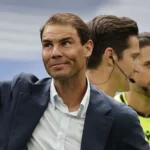
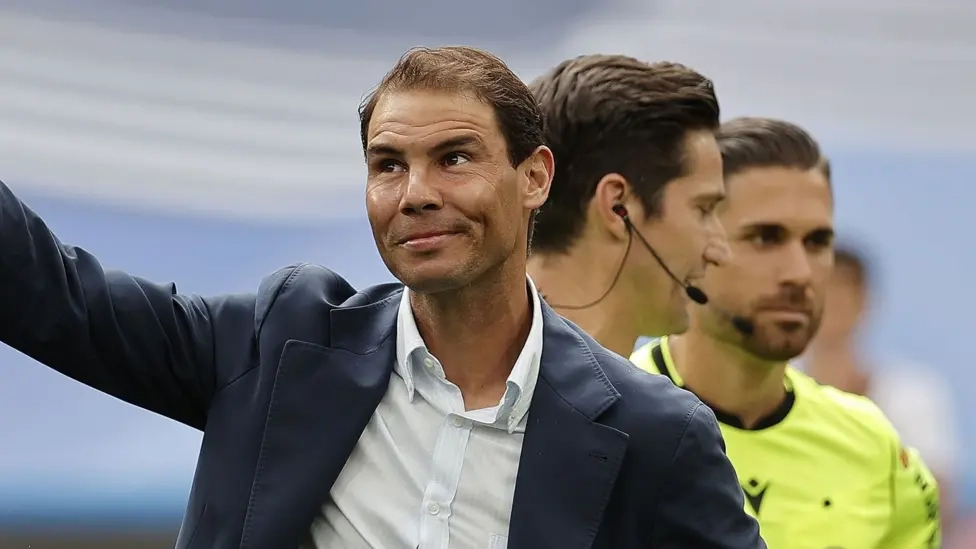
Madrid (Madrid Journals) November 4, 2026 – Retired Spanish tennis icon Rafael Nadal is set to join the board of directors of Real Madrid C.F., subject to formal ratification by the club’s assembly of delegate members later this month. As reported by sports correspondent Simon Stone of BBC Sport, alongside official club communications published by RealMadrid.com, the 15-time European champions announced on Wednesday, November 4, 2026, that the 40-year-old multi-Grand Slam winner has accepted President Florentino Pérez’s proposal to assume a key administrative role within the institution. Nadal, who stepped down from professional tennis in November 2024 following a historic career that included 22 Grand Slam singles titles and two Olympic gold medals, has maintained a lifelong affiliation with the capital club as member number 67,778. The formal appointment will be submitted for final member approval during the upcoming General Assembly, marking Nadal’s transition into high-level football governance.
- Key Points:
- What did Real Madrid state regarding Rafael Nadal’s board nomination?
- How did Rafael Nadal respond to the Real Madrid board invitation?
- What is the current institutional context surrounding Real Madrid’s leadership?
- Background of Rafael Nadal’s Athletic Career and Real Madrid Affiliation
- Real Madrid Executive Strategy and Board Governance
What did Real Madrid state regarding Rafael Nadal’s board nomination?
As reported by sports reporter Guillermo Rai of The Athletic and statements released directly on RealMadrid.com, the executive board of Real Madrid praised Nadal’s athletic legacy, human values, and deep-rooted commitment to Spanish sportsmanship.
In an official public announcement issued by the club’s press office, Real Madrid emphasized the alignment between Nadal’s career ethos and the organizational culture of the institution:
“It is a great source of pride that a figure of his sporting and human stature, a benchmark of Spanish and world sport, will become part of our board of directors and contribute, from this position of responsibility, to the present and future of our club.”
The club further highlighted Nadal’s status as “one of the greatest legends in the history of sport and one of the most admired and recognised Spanish athletes in the world,” noting that his international reputation and commitment to excellence embody the core values of the club.
Nadal has held the status of honorary club member since 2011, frequently attending high-profile matches at the Santiago Bernabéu Stadium alongside club executives.
How did Rafael Nadal respond to the Real Madrid board invitation?
As reported by tennis and football correspondent Tumaini Carayol of The Guardian, Rafael Nadal publicly confirmed his acceptance of the nomination through a social media post, accompanied by a nostalgic photograph from his childhood wearing a complete Real Madrid kit.
Expressing his gratitude toward the club’s executive leadership, Rafael Nadal stated:
“I want to thank president Florentino Perez and the board for proposing that I join the board of directors of Real Madrid. I have accepted this proposal with great excitement, a desire to learn, and a willingness to contribute everything I can.”
Despite his deep ties to Real Madrid, Nadal’s family history includes notable sporting connections to rival institutions; his uncle, Miguel Ángel Nadal, served as a prominent central defender for FC Barcelona during the 1990s. However, Rafael Nadal has consistently reaffirmed his personal allegiance to Real Madrid throughout his professional tennis career.
While Real Madrid confirmed that the delegation of specific operational duties will be finalized following the assembly vote, analysts note that Nadal’s specific administrative focus on the board remains to be detailed in subsequent institutional filings.
What is the current institutional context surrounding Real Madrid’s leadership?
As reported by European football analyst Dermot Corrigan of The Athletic, Nadal’s impending board entry coincides with a period of structural realignment for Real Madrid under President Florentino Pérez.
Pérez, 79, secured re-election for a new four-year presidential term in June 2026, extending an executive tenure that has spanned from 2000 to 2006 and continuously since 2009. The election marked the club’s first contested presidential vote in two decades, during which Pérez defeated challenger Enrique Riquelme.
Upon securing his latest term, Pérez enacted major management changes within the football department, reappointing José Mourinho for a second spell as head coach. The managerial change followed two consecutive seasons in which Real Madrid failed to claim major silverware across La Liga, the UEFA Champions League, or the Copa del Rey.
In the current domestic campaign, Real Madrid occupies third position in the La Liga standings after 11 matches, trailing defending league champions FC Barcelona by three points.
Background of Rafael Nadal’s Athletic Career and Real Madrid Affiliation
Rafael Nadal retired from professional tennis in November 2024 following the Davis Cup Finals in Málaga, concluding one of the most decorated careers in individual sports history. Over two decades on the ATP Tour, the Mallorcan athlete secured 92 singles titles, including a record 14 French Open crowns, two Wimbledon titles, four US Open trophies, and two Australian Open championships. In addition to his 22 Grand Slam victories, Nadal earned two Olympic gold medals (singles in Beijing 2008 and doubles in Rio 2016) and led Spain to five Davis Cup titles.
Throughout his playing career, Nadal maintained an active public presence supporting Real Madrid. He routinely attended European finals, participated in ceremonial kick-offs at the Santiago Bernabéu, and received formal recognition from the club’s general assembly. In multiple media appearances prior to his retirement, Nadal acknowledged that holding an executive or presidential role at Real Madrid in the future was an appealing prospect, though he repeatedly emphasized his deep respect for the established governance procedures governed by the club’s socios (delegate members).
Real Madrid Executive Strategy and Board Governance
The introduction of Rafael Nadal to Real Madrid’s board of directors is predicted to influence the club’s global brand positioning, institutional governance dynamics, and long-term presidential succession planning through 2026 and beyond.
For Real Madrid’s internal administration and international corporate strategy, Nadal’s presence on the board is predicted to strengthen the club’s commercial expansion and global partnership initiatives. As one of the world’s most globally recognized sporting figures, Nadal’s endorsement and executive involvement provide substantial leverage in securing international sponsorships, expanding institutional foundation work, and promoting non-football sporting ventures linked to the club’s brand. His integration will also assist the club in reinforcing its core values of discipline and elite performance as it navigates operational challenges in European football.
For the club’s long-term leadership trajectory and member base, Nadal’s appointment is predicted to position him as a prominent long-term figure within Real Madrid’s governance framework. While Florentino Pérez remains firmly in control of executive operations through his current mandate, corporate analysts and sports commentators predict that Nadal’s entry into the boardroom serves as a foundational step toward grooming high-profile institutional figures for future leadership roles. As delegate members convene to ratify his seat later this month, Nadal’s integration into the board will be closely monitored as a potential precursor to expanded administrative responsibilities within European club football.