Key Points
- Protest Postponement: Major Spanish agricultural organisations—Asaja, COAG, and Unión de Uniones—have suspended a massive tractor march scheduled to enter Madrid, citing respect for victims of a fatal railway collision in Toledo.
- Tragic Toledo Rail Collision: A high-speed collision between a state-owned Renfe AVE train and a private Iryo service near Urda in Toledo province resulted in at least thirty fatalities and dozens of injuries.
- Moment of Silence Observed: Demonstrators paused for five minutes of silence in memory of the victims, emphasizing that while the march is postponed out of solemn respect, the mobilization is not cancelled.
- Five Structural Demands Maintained: The farming sector reaffirms five central demands: an emergency shock plan against input costs, a robust Common Agricultural Policy (CAP), fair prices under the Food Chain Law, protection against unfair foreign competition, and drastic bureaucratic reduction.
- Widespread Rural Mobilisation: Five tractor columns originating from Torrejón de la Calzada, Guadalajara, El Espinar, Buitrago del Lozoya, and Arganda del Rey had begun marching toward the capital before the decision to pause was reached.
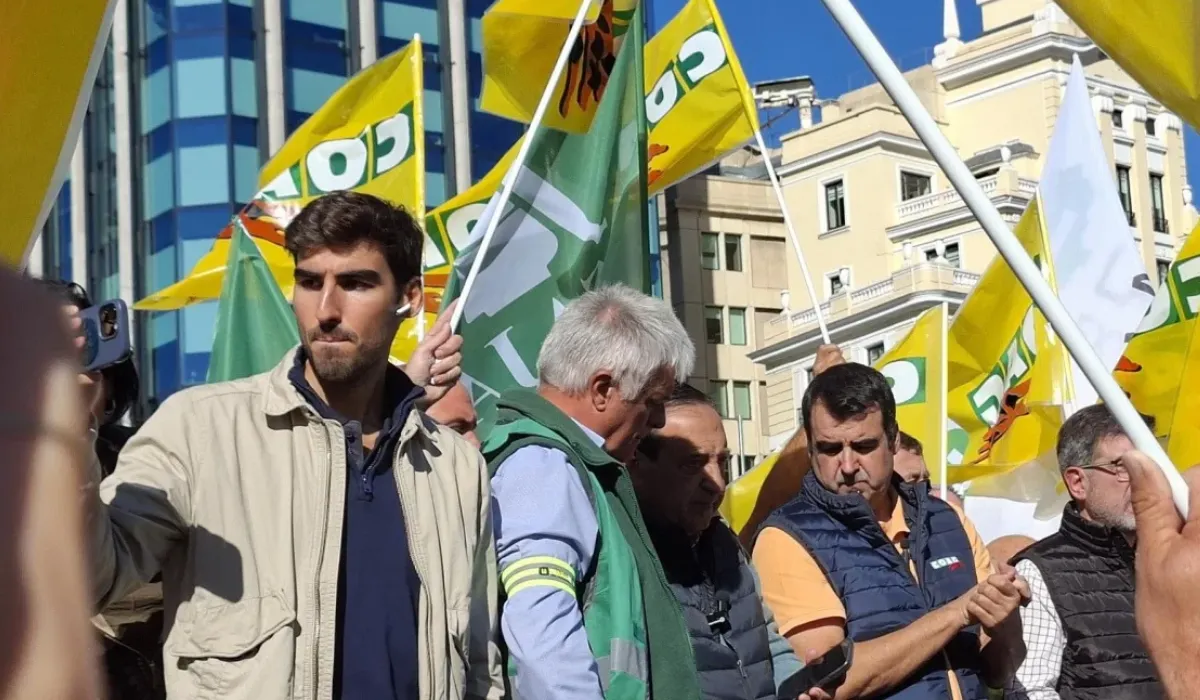
MADRID (Madrid Journals) October 28, 2026 – Major Spanish agricultural unions have suspended a massive tractor protest scheduled to converge on the streets of Madrid following a catastrophic high-speed rail collision in the province of Toledo that claimed at least thirty lives. The agrarian organisations Asaja, COAG, and Unión de Uniones, joined by Cooperativas Agro-alimentarias de España, agreed to pause five separate tractor columns marching from surrounding regions as a mark of respect and solemn solidarity. Demonstrators held a five-minute period of silence for the tragedy, while union leadership emphasised that the postponement does not diminish their resolve to secure urgent government interventions for farm profitability, input cost relief, and regulatory reform.
- Key Points
- Why Was the Major Tractor March to Madrid Postponed by Agricultural Unions?
- How Was the Agrarian Mobilisation Structured Prior to the Postponement?
- What Are the Five Core Demands Put Forward by Spanish Farmers?
- Background of Agricultural Unrest and Railway Safety Developments
- How This Development Will Affect Spanish Agricultural Policy and Rural Communities
Why Was the Major Tractor March to Madrid Postponed by Agricultural Unions?
The decision to put the large-scale agrarian demonstration on hold came in direct response to a major railway tragedy recorded in Urda, Toledo. Early on Wednesday, a state-operated Renfe high-speed AVE train collided with a private Iryo rail service on the Madrid-Seville high-speed corridor.
As reported by El País, regional authorities confirmed that the fatal collision left at least thirty people dead and dozens injured. In response to the scale of the human loss, the leadership of Asaja, COAG, Unión de Uniones, and Cooperativas Agro-alimentarias de España determined that holding a disruptive political march across the capital would be inappropriate.
To honor those who lost their lives in the disaster, agricultural workers and farmers participating in the march paused at their assembly points to observe five minutes of silence. Representatives from the organizing bodies emphasized that the protest had been put on hold purely out of respect for the victims and their families, stressing that the mobilization remains deferred rather than canceled.
How Was the Agrarian Mobilisation Structured Prior to the Postponement?
Before the suspension order was issued, thousands of farmers and livestock breeders accompanied by hundreds of tractors had commenced early-morning movements toward central Madrid. The strategic mobilization had been coordinated into five distinct tractor columns advancing from strategic outer corridors:
- Southern Column: Departing from Torrejón de la Calzada.
- Eastern Column: Advancing from Guadalajara.
- Western Column: Moving from El Espinar.
- Northern Column: Proceeding from Buitrago del Lozoya.
- South-Eastern Column: Originating from Arganda del Rey.
The coordinated objective was to occupy primary thoroughfares in Madrid to demand immediate institutional solutions from the Ministry of Agriculture, Fisheries and Food to ensure the economic survival of rural holdings.
What Are the Five Core Demands Put Forward by Spanish Farmers?
Despite the temporary suspension of physical demonstrations in Madrid, the agricultural organizations reaffirmed that their core platform of five structural demands remains entirely active:
1. Shock Plan Against Rising Production Costs
Producers are demanding an immediate shock plan to counteract the escalation of input prices, centered on the introduction of professional agricultural diesel and a reduced, stable tax regime featuring direct discounts at the fuel pump. Union leaders warn that without extraordinary interim support to absorb soaring energy and fertilizer expenses, key sectors such as cereal farming face severe financial ruin and potential extinction.
2. A Strong Common Agricultural Policy (CAP)
At the European level, the sector calls for a robust Common Agricultural Policy that safeguards agricultural income amidst shifting budget negotiations. Demonstrators reject any potential cuts to rural funding frameworks, insisting on a well-financed, two-pillar CAP structure that guarantees financial stability across European farming regions.
3. Fair Prices and Enforcement of the Food Chain Law
Producers continue to denounce their position as the weakest link within the food supply chain. Unions demand rigorous, effective enforcement of Spain’s Food Chain Law to prevent buyers from purchasing below production costs, ensuring farmers can pass rising operational expenses along to final wholesale pricing.
4. Reciprocity and Protection Against Unfair Foreign Imports
Farming groups oppose trade agreements that allow foreign agricultural imports to enter European markets without meeting equivalent environmental, labor, and phytosanitary standards. The sector reiterates its firm opposition to the EU-Mercosur agreement under current terms and the commercial pact with Morocco, demanding strict border controls and regulatory mirror clauses.
5. Drastic Reduction of Administrative and Bureaucratic Burdens
Producers call for “less paperwork and fewer rules,” pointing out that farmers spend an excessive amount of operational hours completing complex administrative filings, digital logs, and bureaucratic mandates rather than attending to primary agricultural production.
Background of Agricultural Unrest and Railway Safety Developments
The postponement of Wednesday’s tractor march highlights two intersecting challenges facing Spanish authorities in late 2026: widespread rural economic strain and critical transport infrastructure safety.
Over the past three years, Spanish farmers have engaged in repeated regional and national protests to protest mounting operational pressures. The combination of sustained droughts in southern and central Spain, surging energy costs following global supply chain disruptions, and complex European Green Deal compliance mandates has eroded profit margins for middle-tier livestock and crop producers. Previous demonstrations in Madrid during 2024 and 2025 demonstrated the sector’s ability to paralyze urban traffic, making the planned five-column march a major logistical concern for municipal authorities.
Concurrently, the high-speed rail collision near Urda represents one of the most severe railway incidents in recent Spanish history. Spain’s high-speed rail infrastructure—managed by state entity Adif and utilized by state operator Renfe alongside private open-access carriers such as Iryo and Ouigo—has historically been viewed as a benchmark for European transit safety. The collision between an AVE train and an Iryo service on the high-speed line connecting Madrid to Andalusia prompted an immediate regional emergency deployment, the suspension of south-bound rail traffic, and the launching of an official investigation by railway accident authorities.
How This Development Will Affect Spanish Agricultural Policy and Rural Communities
The decision by farming unions to temporarily pause their tractor march while maintaining their core petition will influence near-term political dynamics between rural stakeholders and the central government.
1. Re-scheduling of Mass Urban Mobilisations
Because the core economic pressures facing primary producers remain unresolved, agricultural organizations are expected to announce a new date for the tractor march once national mourning periods conclude. The temporary delay allows regional organizers additional time to consolidate participation across rural cooperatives, meaning the rescheduled march into Madrid could see higher turnout from provincial farming communities.
2. Accelerated Ministerial Dialogue on Input Subsidies
The dignified pause demonstrated by Asaja, COAG, and Unión de Uniones provides a narrow window for the Ministry of Agriculture to engage in preemptive negotiations. To prevent the complete disruption of Madrid’s transit network when protests resume, government officials may feel compelled to propose accelerated tax concessions on agricultural fuel or fast-track emergency funding mechanisms for cereal and livestock sectors.
3. Increased Focus on Trade Reciprocity and Food Chain Compliance
The public visibility of the five demands will maintain heavy pressure on Spanish representatives during European Council meetings. With domestic producers firmly united against unreciprocated import agreements like EU-Mercosur, the Spanish government will face heightened political risk if it supports international trade deals that lack strict mirror clauses or border inspection guarantees.