Key Points
- Identified Assailant: Catalan police (Mossos d’Esquadra) identified a Barcelona supporter who allegedly struck Real Madrid midfielder Eduardo Camavinga and his teammates with a flagpole during goal celebrations at Camp Nou.
- Official Complaints and Investigation: The disciplinary proceedings were initiated following a formal complaint filed by LaLiga, backed by the active security collaboration of FC Barcelona.
- Statutory Fines Under Spanish Sports Law: According to reports by AS, the supporter faces classification for a serious infringement, which carries statutory financial penalties ranging from €3,000 to €60,000.
- Stadium Ban Imposition: In addition to monetary fines, the individual faces a mandatory prohibition from entering any sporting venues for a duration of two to five years.
- Internal Club Disciplinary Action: LaLiga confirmed that the identified individual is connected to a supporters’ group within the Grada 1957 section, and the case has been referred directly to FC Barcelona’s Disciplinary Committee for internal sanctions.
Madrid (Madrid Journals) October 29, 2026 – A Barcelona football supporter has been officially identified by Catalan law enforcement and faces severe administrative and sporting sanctions after allegedly assaulting Real Madrid midfielder Eduardo Camavinga with a flagpole during El Clásico at Camp Nou. The incident occurred during Real Madrid’s celebrations following their second goal in a heated encounter. Prompted by a formal complaint from LaLiga and active cooperation from FC Barcelona’s security personnel, the individual now faces fines under Spain’s Sports Law and a multi-year stadium ban, casting renewed scrutiny on spectator safety during high-profile Spanish fixtures.
- Key Points
- How did the incident occur during El Clásico at Camp Nou?
- What legal penalties and fines does the identified supporter face?
- How has FC Barcelona and LaLiga responded to the Camp Nou security breach?
- Background of the particular development
- How this development can affect La Liga players, club security protocols, and matchday fan conduct
How did the incident occur during El Clásico at Camp Nou?
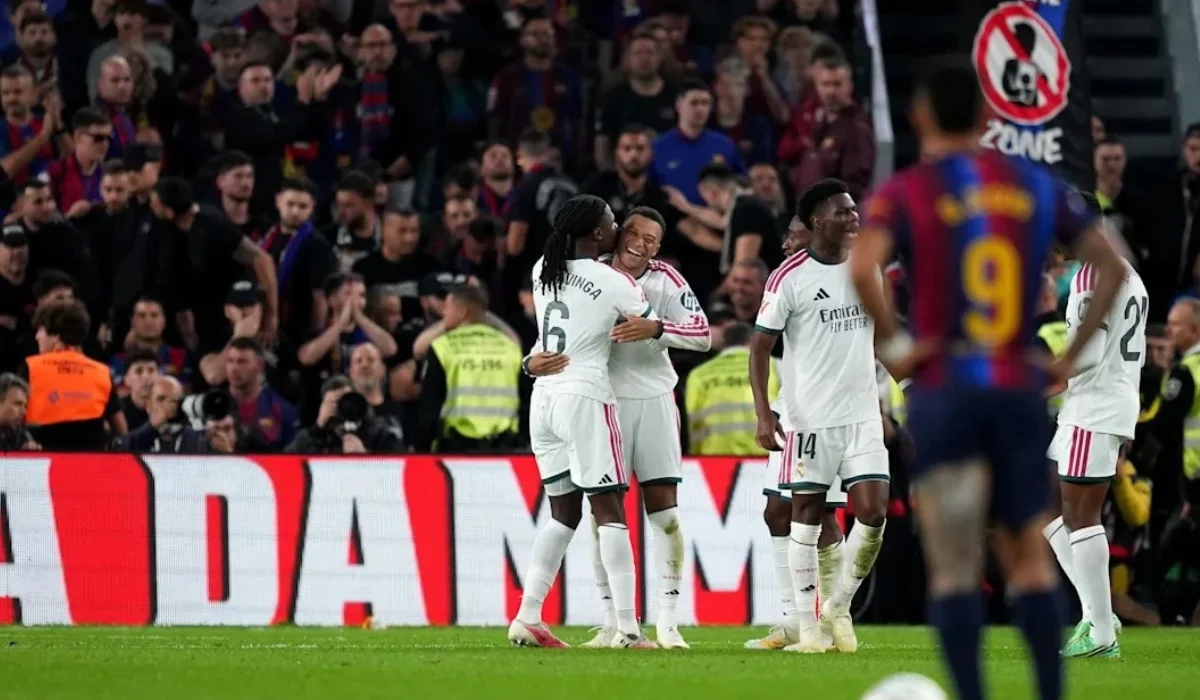
The heated El Clásico encounter at Camp Nou turned disciplinary when goal celebrations boiled over into the spectator stands. During the match, Real Madrid players gathered near the touchline to celebrate their second goal against the Catalan hosts.
Amidst the celebrations, a home supporter breached spectator conduct by reaching into the technical zone or perimeter area with a flagpole, striking French midfielder Eduardo Camavinga and several of his Real Madrid teammates in the face.
The security breach immediately triggered intervention from stadium stewards and law enforcement. Following a formal complaint lodged by LaLiga, the Mossos d’Esquadra (Catalan police) launched a full-scale investigation into the altercation, utilizing stadium CCTV footage and club security records to track down the perpetrator.
What legal penalties and fines does the identified supporter face?
As the administrative and judicial process moves forward, legal experts note that the severity of the punishment will depend on the statutory classification of the assault under Spanish sports legislation.
According to reporting by sports publication AS, the individual faces significant financial and spatial restrictions. Because the physical strike did not result in severe bodily harm or structural stadium damage, legal authorities are classifying the infraction as a serious offence rather than a very serious one.
Under Spain’s Sports Law:
- Serious Infringements: Carry statutory financial penalties ranging from €3,000 to €60,000.
- Very Serious Infringements: Reserve penalties between €60,001 and €650,000 for incidents involving widespread violence or major property destruction.
- Venue Restrictions: In addition to financial fines, the identified supporter faces a formal prohibition preventing entry into any official sporting venues for a period lasting between two and five years.
How has FC Barcelona and LaLiga responded to the Camp Nou security breach?
The swift identification of the assailant was heavily assisted by the home club’s security apparatus. LaLiga officials praised FC Barcelona’s proactive stance in sharing internal access logs and security footage with the Mossos d’Esquadra.
Releasing details regarding the suspect’s affiliations and club-level repercussions, LaLiga stated: “It should also be noted that FC Barcelona’s security services actively collaborated with the police in identifying the individual, who is a member of one of the supporters’ groups in the Grada 1957 section.”
Furthermore, LaLiga confirmed the next phase of administrative accountability, stating: “This case will be referred to the Club’s Disciplinary Committee for appropriate disciplinary action.”
As a result, the supporter faces dual disciplinary tracks: an administrative fine and stadium ban enforced by Spanish authorities under national sports law, alongside membership revocation and internal bans imposed directly by FC Barcelona’s governing committee.
Background of the particular development
El Clásico fixtures between FC Barcelona and Real Madrid have historically represented the pinnacle of Spanish club football, drawing global media attention and intense emotional stakes for supporters. However, high-voltage rivalries have occasionally brought challenges regarding spectator crowd control, pitch invasions, and perimeter security at historic venues like Camp Nou.
In recent years, Spanish football authorities, including the Royal Spanish Football Federation (RFEF) and LaLiga, have adopted zero-tolerance policies toward fan violence, objects thrown onto pitches, and physical altercations involving players or match officials. The strict enforcement of Spain’s Sports Law—alongside heightened cooperation between professional clubs and specialized sports police units like the Mossos d’Esquadra—reflects an ongoing nationwide effort to eradicate hooliganism and protect athlete safety across La Liga stadiums.
How this development can affect La Liga players, club security protocols, and matchday fan conduct
The decisive legal and administrative response to the Camp Nou incident will likely generate several long-term impacts across Spanish professional football:
- For La Liga Players and Visiting Squads: Players participating in high-intensity fixtures will experience enhanced perimeter security and stricter physical separation from home supporters during goal celebrations, reducing the risk of pitch-side altercations.
- For Club Security and Stadium Management: FC Barcelona and other top-tier clubs will face increased regulatory pressure to upgrade perimeter monitoring, barrier integrity, and crowd surveillance, particularly around passionate supporter sections like the Grada 1957.
- For Matchday Fans and Supporters’ Groups: The swift imposition of multi-year stadium bans and heavy financial penalties will serve as a stark deterrent to unruly behavior, reinforcing the legal consequences of breaching spectator codes of conduct across Spanish sports venues.