Key Points:
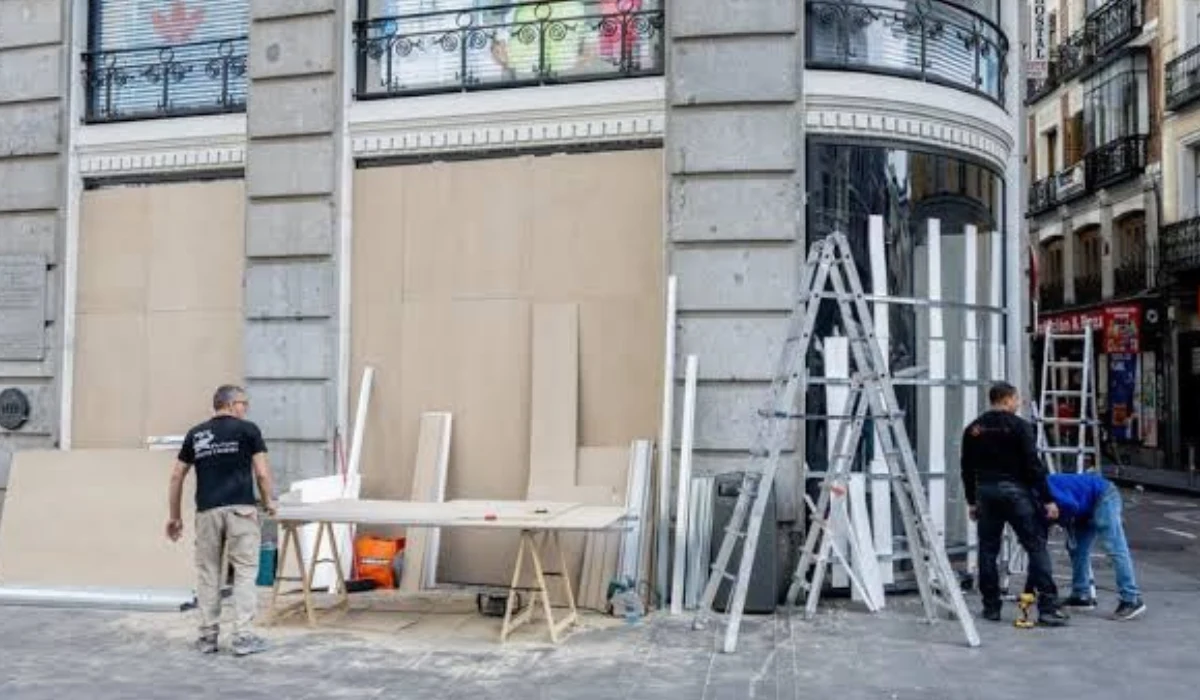
- Preemptive Storefront Protection: Business owners along major commercial thoroughfares in central Madrid, including Gran Vía and Puerta del Sol, have boarded up windows with wooden hoardings ahead of anticipated Halloween weekend disturbances.
- Online Movement Origins: The security precautions follow viral calls on social media attributed to the ‘Blocus’ movement, urging youth groups to engage in looting and vandalism across major Spanish cities.
- Massive Security Deployment: Regional authorities in Madrid have deployed over 1,700 municipal police officers and approximately 200 specialized riot police personnel to safeguard high-density retail districts.
- Preceding Violence in Barcelona: Security measures follow violent riots in Barcelona on October 24, 2026, which resulted in 133 arrests and widespread commercial property damage.
- Nationwide Police Crackdown: National law enforcement agencies across Spain have arrested around ten individuals accused of orchestrating online calls for looting, including the alleged movement leader detained in Picanya, Valencia.
Madrid (Madrid Journals) October 31, 2026 – Major retail outlets and flagship commercial stores across central Madrid have erected protective wooden hoardings over storefront windows as the Spanish capital prepares for potential civil unrest and looting tied to the online ‘Blocus’ movement during the Halloween weekend. According to reports published on Friday, 30 October 2026, by Spanish news outlets and local eye-witness accounts, store owners along Gran Vía, Calle de Fuencarral, and around Puerta del Sol engaged installation crews late into the night to secure property. In response to social media mobilization tactics that triggered severe rioting in Barcelona a week prior, municipal authorities have deployed more than 1,700 municipal police officers and 200 unit riot police officers throughout central corridors to maintain public order.
- Key Points:
- How are Madrid shopkeepers securing major commercial thoroughfares ahead of Halloween?
- What is the ‘Blocus’ movement and how have authorities responded to online riot calls?
- How do earlier Barcelona protests compare to the current Madrid security situation?
- Background of Urban Unrest and Social Media Incitement in Spain
- Central Madrid Retailers, Police Operations, and Insurance Sectors
How are Madrid shopkeepers securing major commercial thoroughfares ahead of Halloween?
As reported by social media footage coordinator antony67 and domestic reporters for El País, maintenance workers were filmed mounting plywood panels over glass display windows across central Madrid throughout Thursday and Friday.
Footage captured by social media user antony67 on October 30 showed crews working on ladders to seal major commercial facades. High-end retail brands including Victoria’s Secret, New Balance, Adidas, Gucci, and Loewe were completely hidden behind bare wooden structures, with construction continuing late into the evening.
In an official caption accompanying the footage, video creator antony67 stated:
“The shops in the Puerta del Sol area of Madrid are starting to armour themselves.”
The eyewitness added that local commercial businesses were taking no chances following online posts encouraging coordinated property destruction during weekend gatherings. Pedestrians carrying luggage and tourists were filmed navigating past shuttered and reinforced building facades across Gran Vía and Calle de Fuencarral.
What is the ‘Blocus’ movement and how have authorities responded to online riot calls?
As reported by police reporters for El Mundo, the ‘Blocus’ movement emerged via encrypted chat networks and public social media platforms, encouraging young people to gather in major urban centres for coordinated looting and vandalism targeting high-value commercial brands on Halloween night.
Similar digital calls led to violent street clashes in Barcelona on October 24, 2026, resulting in 133 arrests, damaged storefronts, and significant public infrastructure destroyed.
Despite local intelligence reports suggesting that the specific Madrid call to action had been formally withdrawn by organizers online, regional security officials refused to scale back protective protocols.
Speaking on local policing measures, national police spokespersons confirmed that law enforcement agencies across Spain executed a targeted crackdown against digital instigators, arresting around ten individuals accused of inciting looting.
As reported by Telecinco, national officers detained the alleged primary coordinator of the ‘Blocus’ movement during a specialized tactical raid in the municipality of Picanya, located in the Valencia province.
To prevent outbreaks of violence in the capital, Madrid authorities initiated a major security operational plan, deploying 1,700 municipal police officers alongside 200 tactical riot police personnel concentrated across Puerta del Sol, Gran Vía, and surrounding shopping streets.
How do earlier Barcelona protests compare to the current Madrid security situation?
As reported by domestic correspondents for La Vanguardia, the security measures undertaken in Madrid directly reflect lessons learned from the violent disturbances that swept Barcelona on October 24.
During the Barcelona unrest, sudden crowds of masked youths targeted retail chains, burning barricades and smashing storefront windows before law enforcement could establish static perimeters. The resulting clash required extensive riot police interventions and led to 133 summary detentions.
Fearing a repeated breakdown in public order, Madrid commercial associations urged members to take proactive structural precautions rather than relying solely on police lines. Business owners across Valencia and Bilbao have reportedly followed suit, installing protective barriers to safeguard retail inventories during high-density evening hours.
Background of Urban Unrest and Social Media Incitement in Spain
Over the past two years, public order agencies across major European metropolitan centers have faced mounting challenges from decentralized, social-media-driven youth movements capable of organizing rapid flash-mob lootings and urban disturbances. The ‘Blocus’ digital trend originally surfaced in France during seasonal holiday periods before crossing into Spanish online networks via messaging platforms such as Telegram and TikTok.
By leveraging anonymous channels, organizers exploit public gatherings—such as Halloween weekend festivities—to mix violent property attacks with larger crowds of regular night-goers. The October 24 riots in Barcelona marked a significant escalation in execution and violence, prompting Spanish national law enforcement to classify online incitement to loot under severe public order and criminal conspiracy statutes. Consequently, police intelligence units now monitor digital networks in real time to identify administrators before scheduled events occur.
Central Madrid Retailers, Police Operations, and Insurance Sectors
The widespread boarding up of commercial facades and the massive deployment of nearly 2,000 security personnel in Madrid are predicted to produce operational, economic, and security consequences for urban stakeholders across Spain.
For central Madrid shopkeepers, luxury brand operators, and local tourism businesses, the physical fortification of Gran Vía and Puerta del Sol will lead to immediate short-term financial losses over the high-volume Halloween shopping weekend. The sight of boarded-up windows and heavy riot police presences is predicted to reduce international tourist foot traffic and depress retail sales. Furthermore, commercial property owners face increased operational overhead costs associated with emergency carpentry installations and private security details.
For Spanish law enforcement and legal authorities, the successful pre-emptive arrest of the ‘Blocus’ movement leader in Valencia and the heavy police footprint in Madrid are expected to deter widespread violence during the immediate holiday period. However, criminal justice analysts predict that Spanish prosecution services will seek stern prison sentences for the ten detained digital instigators to set a legal precedent. This approach aims to discourage online groups from utilizing social media platforms to organize coordinated property destruction across Spanish cities in future holiday cycles.